
By SHIVALI BEST, SCIENCE & TECHNOLOGY EDITOR
Published: 01:00 EDT, 28 October 2025 | Updated: 01:00 EDT, 28 October 2025
The sub–two–hour marathon has long been a dream for elite runners.
But the window to break this elusive record is shrinking – thanks to climate change.
Previous studies have shown that for elite men, the optimal running temperature is 4°C, while for elite women, it’s 10°C.
However, a new analysis by scientists from Climate Central shows that these optimal conditions are slipping away.
The researchers looked at how temperatures are changing on 221 popular global race courses – including London, Berlin, and Boston.
Worryingly, their analysis shows that a whopping 86 per cent of these races will see a decline in odds of optimal running temperatures by 2045.
‘Climate change isn’t just about races becoming harder; it’s about knowing that record-breaking performances could soon be out of reach if conditions keep getting hotter,’ said Mhairi Maclenna, the fastest British finisher at the London Marathon 2024.
‘As athletes, we push limits — but there’s only so much we can do when emissions keep temperatures rising.’
Previous studies have shown that for elite men, the optimal running temperature is 4°C, while for elite women, it’s 10°C. However, a new analysis by scientists from Climate Central shows that these optimal conditions are slipping away
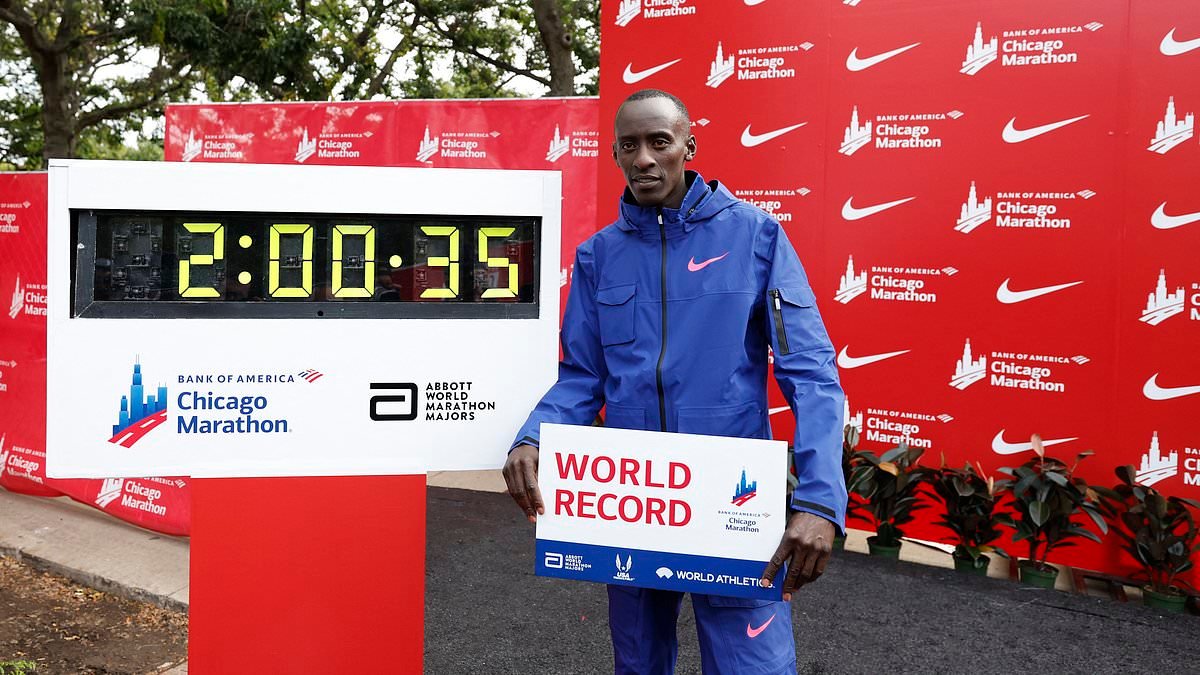
The world record for the fastest 26.2 mile (42.2 km) run is 2:00:35, as set by the late Kenyan athlete Kelvin Kiptum at the 2023 Chicago Marathon